Advanced, minimally invasive procedures to diagnose and treat complex airway and lung conditions — and expert intensive-care management when it matters most.
Minimally invasive, scope-based procedures to diagnose and treat airway and lung disease without open surgery.
Flexible Bronchoscopy
A thin, flexible camera passed into the airways to inspect, sample and treat lung conditions.
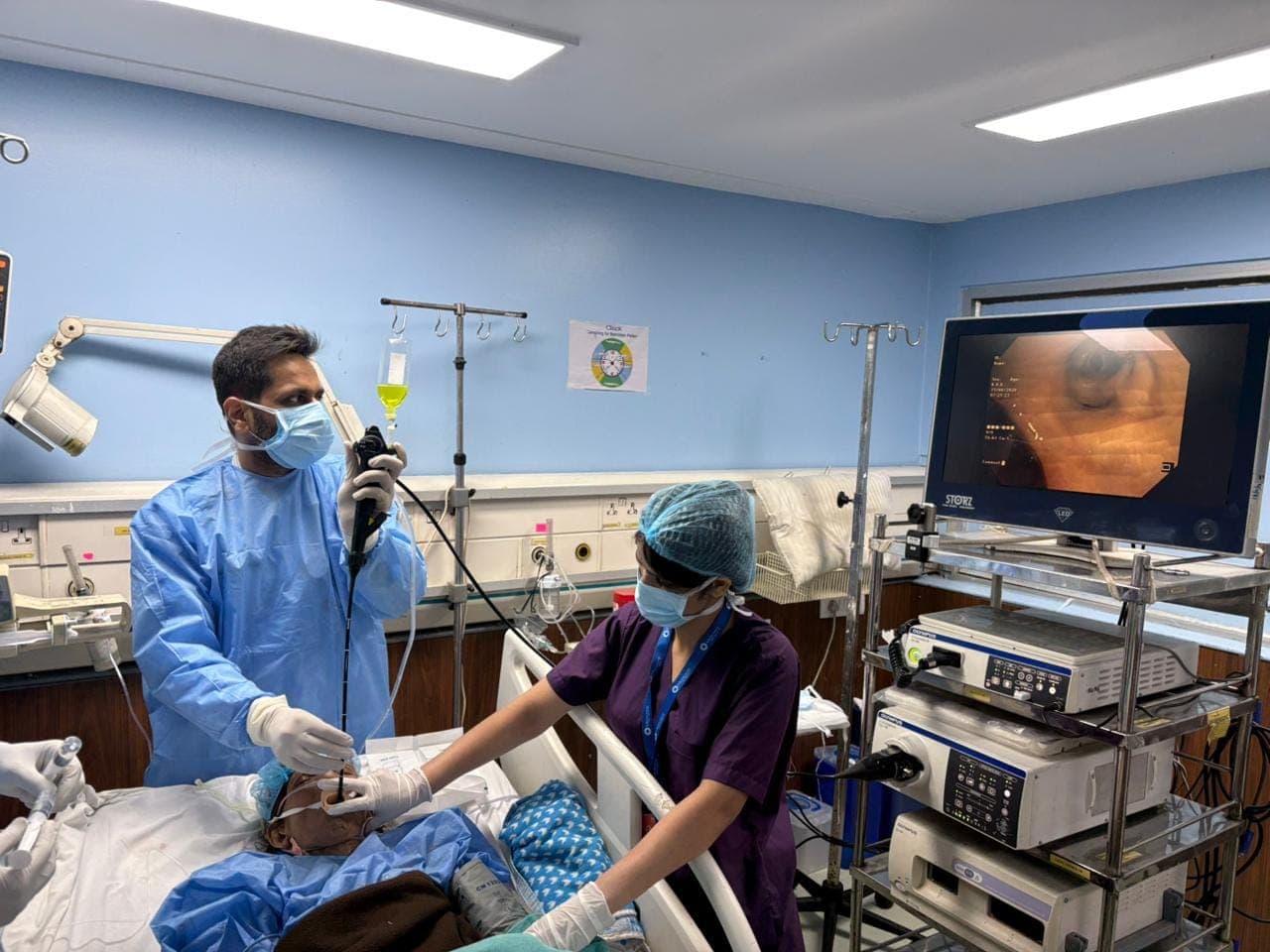
Flexible bronchoscopy uses a slim, flexible scope passed through the nose or mouth into the airways under light sedation. It lets the specialist see inside the lungs directly and take samples for diagnosis.
It is a key tool for investigating persistent cough, coughing up blood, abnormal scans, infections and suspected cancer.
Used for
Diagnosing unexplained lung shadows or masses
Sampling for infection, TB, fungal disease or cancer
Investigating coughing up blood (haemoptysis)
Clearing secretions or mucus plugs
Rigid Bronchoscopy
A precise airway procedure under anaesthesia for complex therapeutic interventions.
Rigid bronchoscopy uses a straight metal scope under general anaesthesia, giving excellent control of the airway. It is used for advanced therapeutic procedures that the flexible scope cannot perform.
It is the platform for treating major airway obstruction, removing larger foreign bodies, controlling bleeding and placing airway stents.
Used for
Relieving major (central) airway obstruction
Tumour debulking and stent placement
Removing large or difficult foreign bodies
Controlling significant airway bleeding
EBUS-TBNA
Ultrasound-guided airway sampling of lymph nodes and masses — key for diagnosing and staging lung cancer.
Endobronchial Ultrasound with Transbronchial Needle Aspiration (EBUS-TBNA) combines a bronchoscope with an ultrasound probe to see and sample lymph nodes and masses next to the airways in real time.
It is the modern, minimally invasive standard for diagnosing and staging lung cancer and for assessing enlarged chest lymph nodes — avoiding more invasive surgery.
Used for
Diagnosing and staging lung cancer
Sampling enlarged mediastinal (chest) lymph nodes
Investigating sarcoidosis and infections such as TB
Accurate tissue diagnosis with minimal invasiveness
Endobronchial Tumour Debulking
Removing tumour blocking an airway using laser, cautery or cryotherapy to restore breathing.
When a tumour grows into and blocks a major airway, it can cause severe breathlessness and collapse of the lung beyond it. Endobronchial debulking removes or shrinks this tissue using techniques such as laser, electrocautery or cryotherapy.
The aim is to rapidly reopen the airway, relieve breathlessness and improve quality of life, often alongside other cancer treatments.
Used for
Relieving airway obstruction from tumour
Easing severe breathlessness quickly
Re-expanding a blocked, collapsed lung segment
Controlling tumour-related airway bleeding
Airway Stent Placement
Placing a stent to hold open a narrowed or collapsing airway and restore airflow.
An airway stent is a small tube placed within a narrowed or weakened airway to keep it open. It is used when an airway is compressed or narrowed by tumour, scarring or external pressure.
Stenting can provide rapid and lasting relief of breathlessness in carefully selected patients.
Used for
Holding open airways narrowed by tumour or compression
Treating airway narrowing (stenosis) from scarring
Sealing certain airway leaks or fistulae
Maintaining airflow after debulking
Foreign Body Removal
Safe removal of inhaled objects from the airways using bronchoscopy.
Accidentally inhaled objects — common in children but also seen in adults — can lodge in the airways and cause coughing, choking, infection or collapse of part of the lung.
Bronchoscopic removal extracts the object safely, usually avoiding open surgery, and prevents ongoing complications.
Used for
Removing inhaled food, seeds or small objects
Treating persistent cough or infection from a retained object
Re-expanding a lung segment blocked by a foreign body
Avoiding open surgery in most cases
Critical Care
Advanced management of critically ill patients with respiratory failure, including ICU and ventilator support.
ICU & Ventilator Support
Advanced intensive-care management of patients with respiratory failure and critical illness.
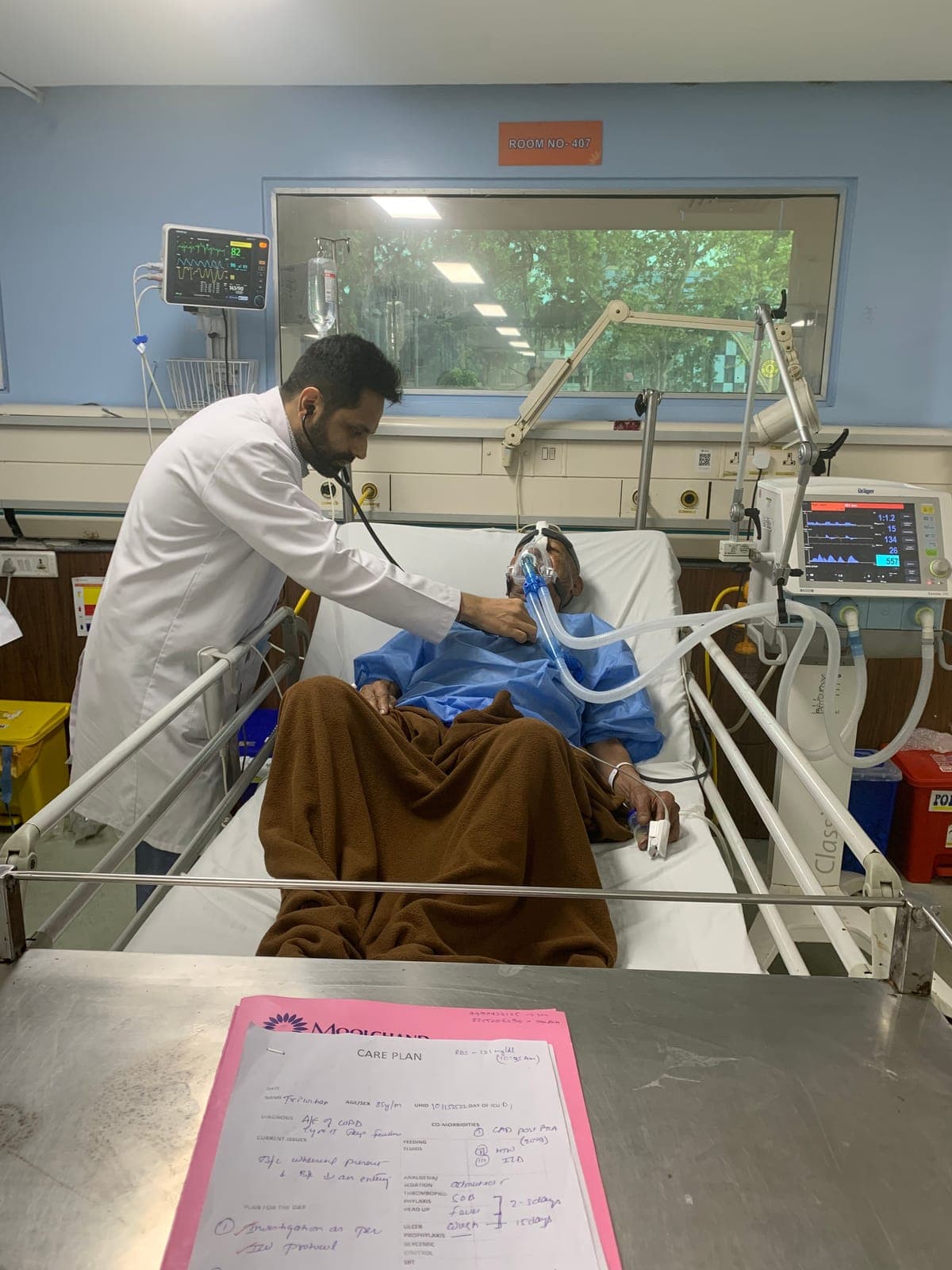
Critically ill patients with severe pneumonia, COPD or asthma attacks, COVID-19, sepsis or respiratory failure need close monitoring and advanced support in an intensive care unit.
Dr. Kunal Luthra is trained in intensive care medicine and manages oxygen therapy, non-invasive and invasive ventilation, and weaning patients safely back to independent breathing.
Used for
Respiratory failure needing oxygen or ventilation
Severe pneumonia, COPD or asthma exacerbations
Non-invasive (BiPAP/CPAP) and invasive ventilation
Weaning and recovery from ventilator support
Need an opinion on a lung procedure?
Discuss your scans and reports to understand the safest, least invasive option.